


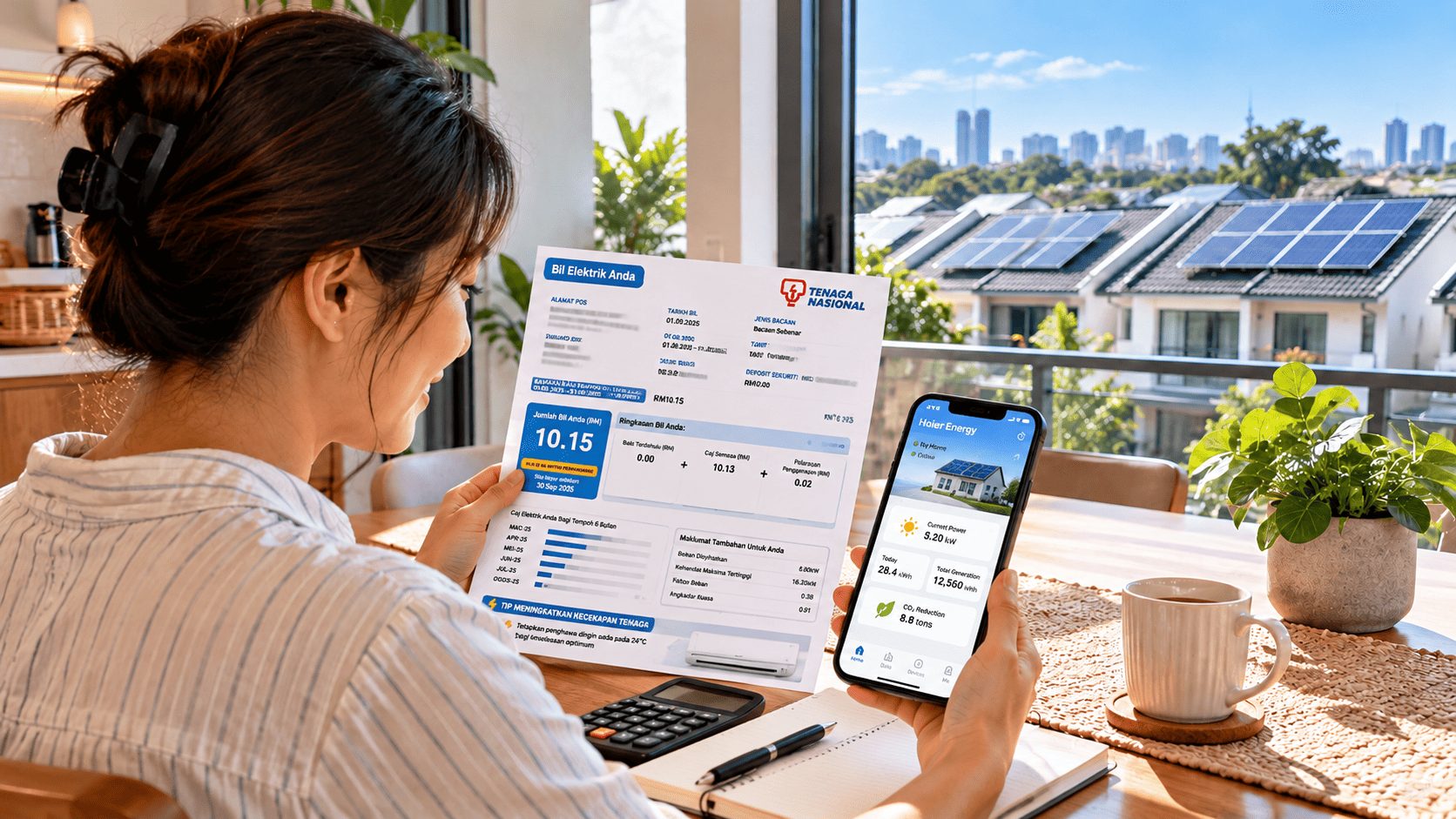
How Much Can You Save with Solar Panels in Malaysia?
Find out how solar panels can help reduce your electricity bills and how long it may take to recover your investment.
Can Solar Panels Really Reduce Your TNB Bill?
One of the main reasons Malaysian homeowners consider installing solar panels is to save on electricity bills.
But how much can you actually save?
The answer depends on your household’s electricity consumption, solar system size and how much solar electricity you use during the day.
While solar panels can help reduce electricity costs, not every household will achieve the same savings, even with an identical solar system.
Let’s explore how solar savings work in Malaysia and what you should consider before investing.
How Do Solar Panels Reduce Your Electricity Bill?
Solar panels generate electricity from sunlight, allowing your home to use solar generated power instead of purchasing all its electricity from TNB.
There are two main ways solar can help reduce your bill.
Use Solar Electricity Directly
During the day, solar panels generate electricity that can power household appliances such as air conditioners, refrigerators, washing machines and other electrical devices.
The more solar electricity you use directly, the less electricity you need to purchase from the grid.
Export Surplus Electricity to the Grid
Under Malaysia’s Solar ATAP programme, eligible homeowners can export surplus solar electricity to the grid and receive bill credits.
However, exported electricity is credited according to the programme’s rules, and its value may differ from the electricity charges you avoid through direct consumption.
This is why understanding your household’s daytime electricity usage is important when planning a solar installation.
How Much Can You Save with Solar Panels?
Your potential savings depend on how much electricity your solar system generates and how that electricity is used.
Let’s look at a simplified example.
Example: A Malaysian Home with a 6.25 kWp Solar System
Assume the following:
| Item | Illustrative Estimate |
|---|---|
| Solar system size | 6.25 kWp |
| Monthly solar generation | 650 kWh |
| Solar electricity used directly at home | 390 kWh |
| Surplus electricity exported | 260 kWh |
In this example, the household uses 60% of its solar generation directly and exports the remaining 40%.
The financial benefit comes from two sources:
Direct electricity savings: The 390 kWh used at home reduces the amount of electricity purchased from TNB.
Export credits: Eligible exported electricity may reduce the Energy Charge component of the TNB bill, subject to Solar ATAP rules.
The final monthly savings depend on the household’s applicable tariff, electricity consumption, export credit eligibility and other bill components.
What Affects Your Solar Savings?
Several factors influence how much you can save.
Your Electricity Consumption
Households with higher electricity consumption may have greater opportunities to offset electricity purchased from TNB, provided the solar system is appropriately sized.
Daytime Electricity Usage
Solar panels generate electricity during daylight hours. Using appliances such as washing machines or air conditioners while solar generation is available can increase direct solar consumption.
Solar System Size
A larger solar system can generate more electricity, but installing more panels does not automatically guarantee higher financial returns.
Your system should be matched to your electricity needs and roof capacity.
Roof Direction, Shading and Weather
Solar generation depends on sunlight exposure, panel orientation, shading, weather conditions and system performance.
TNB Electricity Tariff
Your savings are also affected by the applicable electricity tariff and billing structure.
For the latest tariff information, refer to TNB’s official electricity billing information.
How Long Does It Take for Solar Panels to Pay for Themselves?
The payback period refers to how long it takes for accumulated electricity savings to recover the initial solar investment.
A simple way to estimate it is:
For example, using Solar Nation’s 6.25 kWp home solar package:
| Item | Illustrative Amount |
|---|---|
| Solar installation price | RM16,300 |
| Assumed monthly savings | RM250 |
| Estimated annual savings | RM3,000 |
| Simple payback period | Approximately 4.9 years |
This example assumes monthly savings of RM250 throughout the calculation.
Based on a favourable savings scenario. Actual savings and payback periods may vary depending on electricity consumption, solar generation, applicable tariffs, rebates and installation costs. Estimates are illustrative and not guaranteed.
For a more meaningful payback estimate, homeowners should request an assessment based on their actual electricity consumption and property.
How Can You Maximise Your Solar Savings?
Here are some practical ways to make better use of your solar system.
Use More Electricity During the Day
Where practical, schedule electricity intensive activities such as laundry during daylight hours when your panels are generating electricity.
Choose the Right Solar System Size
Avoid choosing a system based on price or panel quantity alone. A properly sized system should reflect your electricity consumption and installation conditions.
Monitor Your Solar Performance
Compatible solar monitoring systems can help you understand electricity generation and identify changes in system performance.
Maintain Your Solar System
Periodic inspection and maintenance can help keep your solar system operating effectively over time.
Consider Battery Storage When Suitable
A compatible solar battery can store electricity for later use, including in the evening. However, batteries add to the initial investment, so their financial value should be assessed separately.
Is Solar Worth It for Your Home?
Solar panels can be a worthwhile long term investment for Malaysian homeowners, particularly when the system is properly sized and electricity generation is well matched to household usage.
However, the best way to understand your potential savings is to assess your actual electricity consumption rather than relying on general estimates.
Before deciding, consider your electricity bill, daytime usage, available roof space, installation cost and long term energy needs.
Find Out How Much You Could Save with Solar Nation
At Solar Nation, we help homeowners explore suitable solar solutions based on their property and electricity consumption.
As an official distributor of Haier Energy, we offer home solar solutions supported by consultation, system recommendations, installation and after-sales assistance.
Our home solar packages start from RM16,300, before government rebates.
Want to know which system may be suitable for your home and how much you could potentially save?
Frequently Asked Questions
Not necessarily. Your home may still use electricity from the grid, especially at night or when solar generation is insufficient. Certain electricity charges may also remain payable.
A bigger system can generate more electricity, but actual savings depend on your household’s consumption and how much solar electricity you use or export.
Yes, solar panels can still generate electricity when sunlight is available, but output is generally lower during cloudy or rainy conditions.
Direct solar consumption is generally beneficial because it reduces the electricity you need to purchase from TNB. Export credits are calculated separately under the applicable solar programme.
Comments are closed