


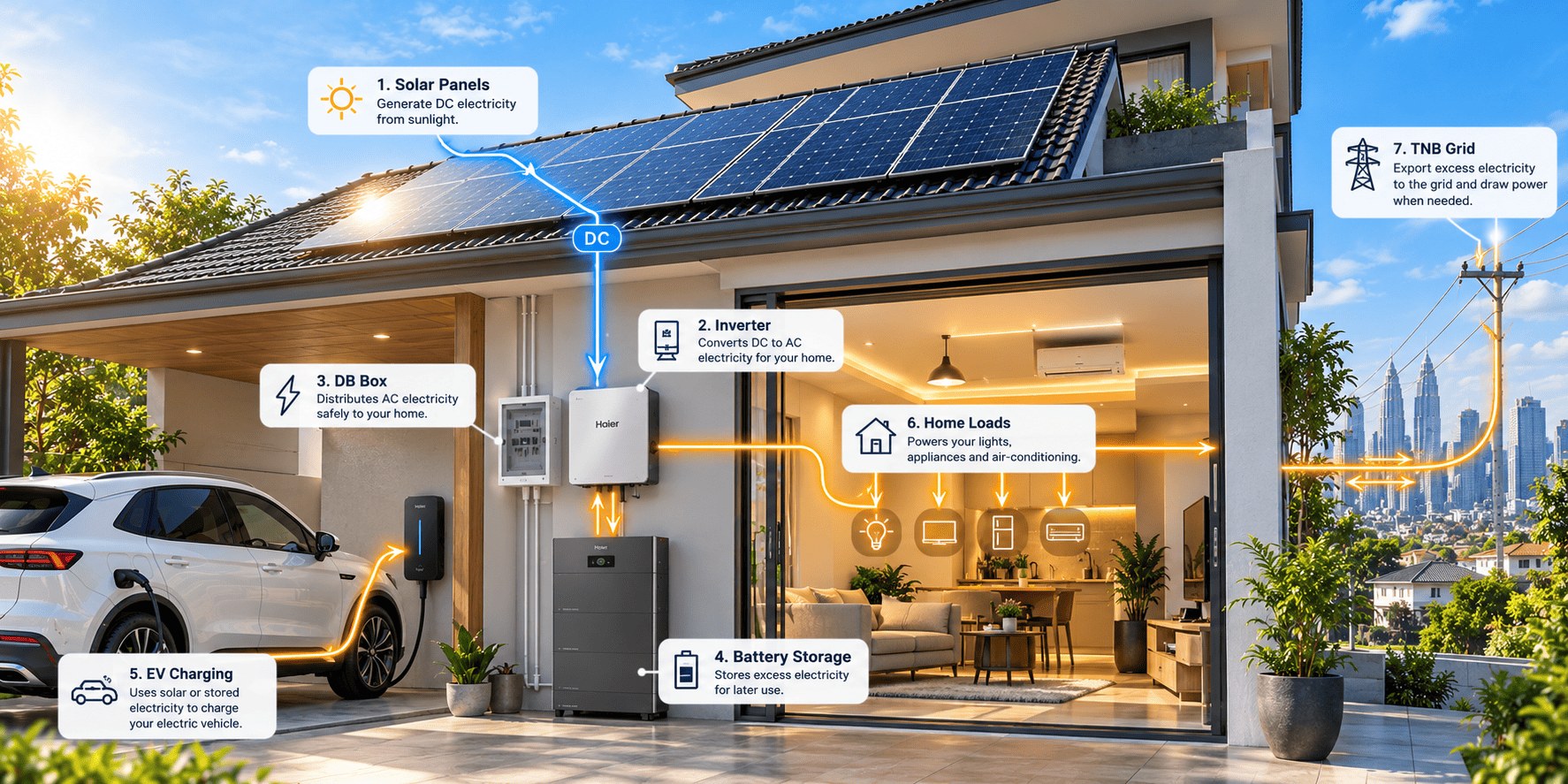
Smart Energy 101: How Solar, Storage & EV Charging Work Together
Discover how solar panels, battery storage and EV charging can work together for smarter energy use at home or work.
What If Your Home Could Use Energy More Efficiently?
Imagine a home where solar panels generate electricity during the day, a battery stores excess energy for later, and your electric vehicle (EV) can charge using available solar power.
With the right combination of technologies, this is what a smart energy system can help you achieve.
But what exactly is smart energy, and do you need all these solutions to get started?
Let’s explore how they work together.
What Is Smart Energy?
Smart energy is about generating, storing, monitoring and managing electricity more efficiently.
A typical smart energy system may include five key components:
| Component | What It Does |
|---|---|
| Solar PV Panels | Generate electricity from sunlight |
| Solar Inverter | Converts solar electricity into usable AC electricity |
| Battery Storage | Stores energy for later use |
| EV Charger | Charges your electric vehicle |
| Energy Management System | Monitors and helps manage electricity usage |
When compatible equipment is properly connected, these solutions can work together to support your home’s or business’s electricity needs.
The best part? You don’t need to install everything at once.
You can start with solar panels and consider adding battery storage, EV charging or energy management features later.
Solar Panels: Generate Your Own Electricity
Solar photovoltaic (PV) panels convert sunlight into direct current (DC) electricity.
A solar inverter converts this electricity into alternating current (AC), which can be used by household appliances and other electrical equipment.
During the day, solar electricity can help power:
- Air-conditioners and refrigerators
- Washing machines and other appliances
- Lighting and home office equipment
- Commercial equipment and building facilities
When solar generation is insufficient, electricity can still be supplied by the grid.
Depending on the applicable solar programme and system configuration, eligible surplus solar electricity may also be exported to the grid.
Battery Storage: Save Energy for Later
Solar panels generate electricity when sunlight is available, but electricity consumption often continues into the evening.
That’s where battery storage can help.
With a compatible solar and battery system, surplus solar electricity can be stored during the day and used later when needed.
For example:
During the Day
Solar panels generate electricity for your home. Available excess generation may charge the battery.
In the Evening
When solar generation decreases, the battery may supply stored electricity to your home.
During a Power Interruption
A properly configured battery system may provide backup electricity to selected appliances or circuits.
However, not all battery systems offer backup functionality. Backup capability depends on the inverter, battery, electrical design and supported loads.
Battery storage is optional, and whether it is worthwhile depends on your electricity usage, budget and energy requirements.
EV Charging: Power Your Journey with Solar
If you own an electric vehicle, installing a suitable EV charger at home can make charging more convenient.
But can solar panels help charge your EV?
Yes, with the right electrical setup.
When your solar panels generate electricity, that energy can contribute to your home’s overall electricity demand, including EV charging.
For example, charging your EV during sunny daytime hours may help increase your use of solar generated electricity.
If solar generation is insufficient, the charger can draw the remaining electricity from the grid or other available sources, depending on the system configuration.
Some compatible smart chargers also support features such as scheduled charging and load management.
Actual charging speed depends on the charger, vehicle and available electrical supply.
Energy Management: Bringing Everything Together
An energy management system helps users understand how electricity is generated, stored and consumed.
Depending on the equipment and compatibility, you may be able to monitor:
- Real time solar electricity generation
- Household or building electricity consumption
- Battery charging and remaining energy
- Electricity imported from or exported to the grid
- EV charging activity
Some systems also support scheduling or controlling compatible equipment to help manage energy usage.
For example, selected systems may prioritise solar self consumption, schedule battery charging or manage EV charging based on available electrical capacity.
Energy monitoring shows you what’s happening. Energy management helps you make better use of that information.
Available functions depend on the selected products, software and system configuration.
A Day with Smart Energy
Let’s look at how an integrated solar, battery and EV charging system might work in a Malaysian home.
| Time | How Smart Energy Can Help |
|---|---|
| Morning | Solar generation begins increasing as sunlight becomes available |
| Afternoon | Solar powers household appliances; surplus generation may charge the battery or support EV charging |
| Evening | Stored battery energy may help supply household electricity after solar generation decreases |
| Night | The home uses available stored energy or grid electricity; EV charging may be scheduled when appropriate |
This is an illustrative example. Actual energy flow depends on sunlight, electricity demand, battery capacity, system settings and the applicable solar programme.
A smart energy system does not mean you will never need grid electricity.
Instead, it helps you make better use of available solar generation and manage when electricity is consumed.
Do You Need Solar, Battery Storage and EV Charging Together?
Not necessarily.
Every home and business has different energy requirements.
Here are some common starting points.
Option 1: Solar PV Only
Suitable for homeowners who want to generate electricity and reduce daytime grid consumption.
Option 2: Solar PV + Battery Storage
For customers who want to store suitable excess solar generation for later use or explore compatible backup options.
Option 3: Solar PV + EV Charging
For EV owners who want convenient charging and the opportunity to use solar electricity when available.
Option 4: Solar PV + Battery + EV Charging
For customers interested in a more integrated energy setup with compatible monitoring and management features.
You can choose a solution that suits your current needs and plan for future upgrades.
When considering expansion, check product compatibility, inverter capacity, electrical infrastructure and available installation space.
Smart Energy for Malaysian Homes and Businesses
Smart energy isn’t just for landed homes.
Different properties can benefit from different combinations of energy solutions.
For Homes
A household may install rooftop solar to reduce daytime grid electricity consumption, add a battery for evening use and install an EV charger for convenient charging.
For Businesses
An office, warehouse, factory or commercial building may use rooftop solar to support daytime operations, install EV charging facilities for staff or visitors, and use energy monitoring to better understand electricity demand.
For larger commercial installations, battery storage and energy management may also support selected operational needs, depending on the system design.
The right solution depends on the property’s electricity usage, infrastructure, budget and applicable regulations.
Why System Design and Compatibility Matter
Although solar, batteries and EV chargers can work together, not every product is automatically compatible.
Before installing an integrated system, it is important to check:
- Inverter and battery compatibility
- Electrical supply and available capacity
- EV charger specifications
- Energy monitoring and management functions
- Installation safety and regulatory requirements
- Future expansion needs
A proper technical assessment helps ensure that the selected components are suitable for your property and intended application.
Explore Smart Energy with Solar Nation
At Solar Nation, we believe smarter energy should be accessible to more Malaysian homes and businesses.
As an official distributor of Haier Energy, Solar Nation offers a range of smart energy solutions, including:
- Solar PV & Inverters
- Battery Storage
- Energy Management
- EV Charging
- Integrated Smart Energy Solutions
From consultation and system recommendations to installation and after-sales support, our team helps you explore solutions that suit your energy requirements.
Whether you’re starting with rooftop solar or planning a more integrated energy system, we’re here to help.
Ready to explore smarter energy for your property?
Frequently Asked Questions
No. Solar panels can operate without battery storage using a suitable grid-connected system. A battery is an optional addition for customers with specific battery storage requirements.
Yes. Solar electricity can contribute to EV charging when the system is appropriately configured. Actual solar contribution depends on generation, charging demand and electrical connections.
Not automatically. Backup power requires compatible equipment and a properly designed electrical system. The duration of backup depends on available battery energy and connected loads.
Many modern solar systems support app based monitoring. Available information and control functions depend on the product model and system configuration.
Often, yes. However, future upgrades depend on inverter compatibility, electrical capacity, available space and other technical requirements. Planning ahead can help avoid unnecessary changes later.
Comments are closed