


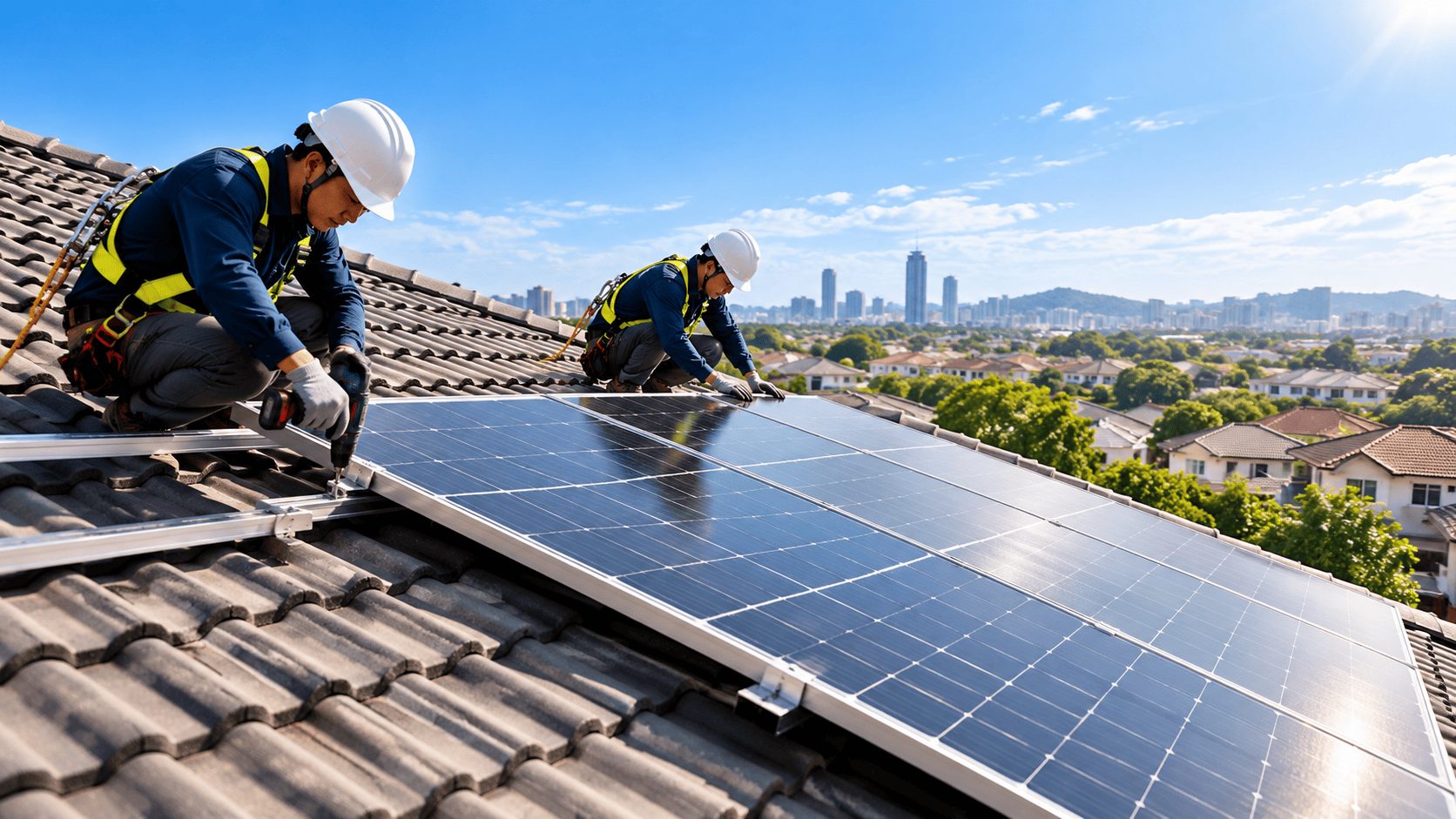
How Much Does Solar Cost in Malaysia in 2026?
Explore home solar prices in Malaysia, what affects installation costs and how to choose a system that suits your budget.
Thinking of Installing Solar Panels at Home?
With electricity costs becoming an important consideration for Malaysian households, more homeowners are exploring solar energy as a way to manage their long-term electricity expenses.
But one of the first questions is: How much does it actually cost to install solar panels in Malaysia?
The answer depends on your electricity usage, roof space, system size and installation requirements.
The good news is that home solar systems are available in different sizes and price ranges, allowing homeowners to choose a solution that suits their needs and budget.
How Much Does a Home Solar System Cost in Malaysia?
In Malaysia, the cost of a residential solar system varies depending on the system capacity, equipment and installation requirements.
As a reference, Solar Nation offers the following home solar packages with Inverter:
| Solar System Size | Package Price |
|---|---|
| 6.25 kWp | RM16,300 |
| 7.50 kWp | RM19,100 |
| 8.75 kWp | RM21,800 |
| 10.00 kWp | RM23,500 |
| 11.25 kWp | RM26,600 |
| 12.50 kWp | RM28,300 |
Prices are before any applicable government rebates or incentives. Final quotations are subject to site assessment, installation requirements and package terms.
A larger system generally generates more electricity under similar conditions, but it also requires more roof space and a higher initial investment.
The best choice is not necessarily the largest or cheapest system. It is the one that matches your household’s electricity consumption and property requirements.
What Affects the Cost of Solar Installation?
Several factors can influence the final cost of installing solar panels at home.
Solar System Size
System capacity is measured in kilowatt peak (kWp). A larger system typically requires more solar panels and supporting equipment, which affects the overall price.
Solar Panels and Inverter
The type, capacity and specifications of the solar panels and inverter influence system cost and performance. Product warranties and manufacturer support are also worth considering.
Roof Type and Condition
Tile roofs, metal roofs and different roof layouts may require different mounting methods. Roof condition, shading and available installation space can also affect the proposed system design.
Installation and Electrical Requirements
Every home is different. Cable routing, electrical configuration, mounting requirements and additional work may affect the final quotation.
Optional Battery Storage
A standard solar PV system does not necessarily include a battery. Adding compatible battery storage increases the upfront investment but may provide additional flexibility, including backup power when the system is designed for it.
What Should You Check Before Comparing Solar Packages?
When comparing solar quotations, don’t look at the price alone.
Make sure you understand:
- Solar panel capacity and quantity
- Inverter type and capacity
- Equipment and installation warranty coverage
- Standard installation scope and possible additional charges
- Monitoring features and after-sales support
- Applicable approval and grid-connection arrangements
Two solar packages with similar prices may offer different equipment, installation scopes and warranty terms.
A clear quotation helps you understand what you are paying for and avoid unexpected costs later.
How Do You Choose the Right Solar System Size?
The right system size depends on more than the size of your house.
Your monthly electricity consumption, daytime energy usage, roof space and electrical supply all play an important role.
For example, a household with several air conditioners and high daytime electricity usage may have different solar requirements from a household with lower consumption.
A solar assessment can help determine a suitable system size based on your electricity bill, property and energy needs.
Are There Government Rebates for Solar in 2026?
Malaysia has introduced programmes to encourage residential solar adoption, including Solar ATAP and the SuRIA Home incentive.
Under the announced SuRIA Home programme, eligible residential applicants may qualify for a rebate of RM600 per kWac, capped at RM3,000, subject to programme conditions, application dates and available allocation.
Not every installation will automatically qualify.
It is important to check the latest eligibility requirements and programme status before making a purchase decision.
Is Installing Solar Worth the Investment?
Solar is a long term investment that may help reduce your dependence on grid electricity and lower your electricity bills.
However, the actual financial benefit depends on several factors, including:
- Your household’s electricity consumption
- How much solar electricity you use directly
- The system’s electricity generation
- Your applicable electricity tariff
- Installation cost and ongoing system performance
Rather than focusing only on the lowest installation price, consider the long term value of the system.
Start Your Solar Journey with Solar Nation
At Solar Nation, we help homeowners explore suitable solar solutions based on their property, electricity usage and energy needs.
As an official distributor of Haier Energy, Solar Nation provides access to solar PV and smart energy solutions, supported by consultation, system recommendations, installation and after sales assistance.
Home solar packages start from RM16,300, before government rebates.
Ready to explore solar for your home?
Frequently Asked Questions
The price depends on system size, equipment and installation requirements. Solar Nation’s advertised home solar packages start from RM16,300 for a 6.25 kWp system, before applicable rebates.
Not necessarily. A home solar PV system can operate without battery storage. A compatible battery can be added when suitable for your system and energy needs.
Eligible homeowners may qualify for applicable government incentives, subject to the programme’s current terms, application requirements and available allocation.
Start by reviewing your electricity bill, roof space and household energy usage. Solar Nation can help assess your requirements and recommend a suitable system.
Comments are closed